Let's be real: most writing tools feel like homework. You open a blank doc, stare at the cursor, and suddenly your brain is empty. You're not blocked—you're bored. Or stressed. Or both. That's the real problem, not lack of skill.
Writely flips that. It turns drafting from a chore into something you actually want to do. Even people who write for a living—pros who already know their way around a sentence—find themselves having fun again. Why? Because it doesn't just help you write. It makes writing feel like leveling up in a game.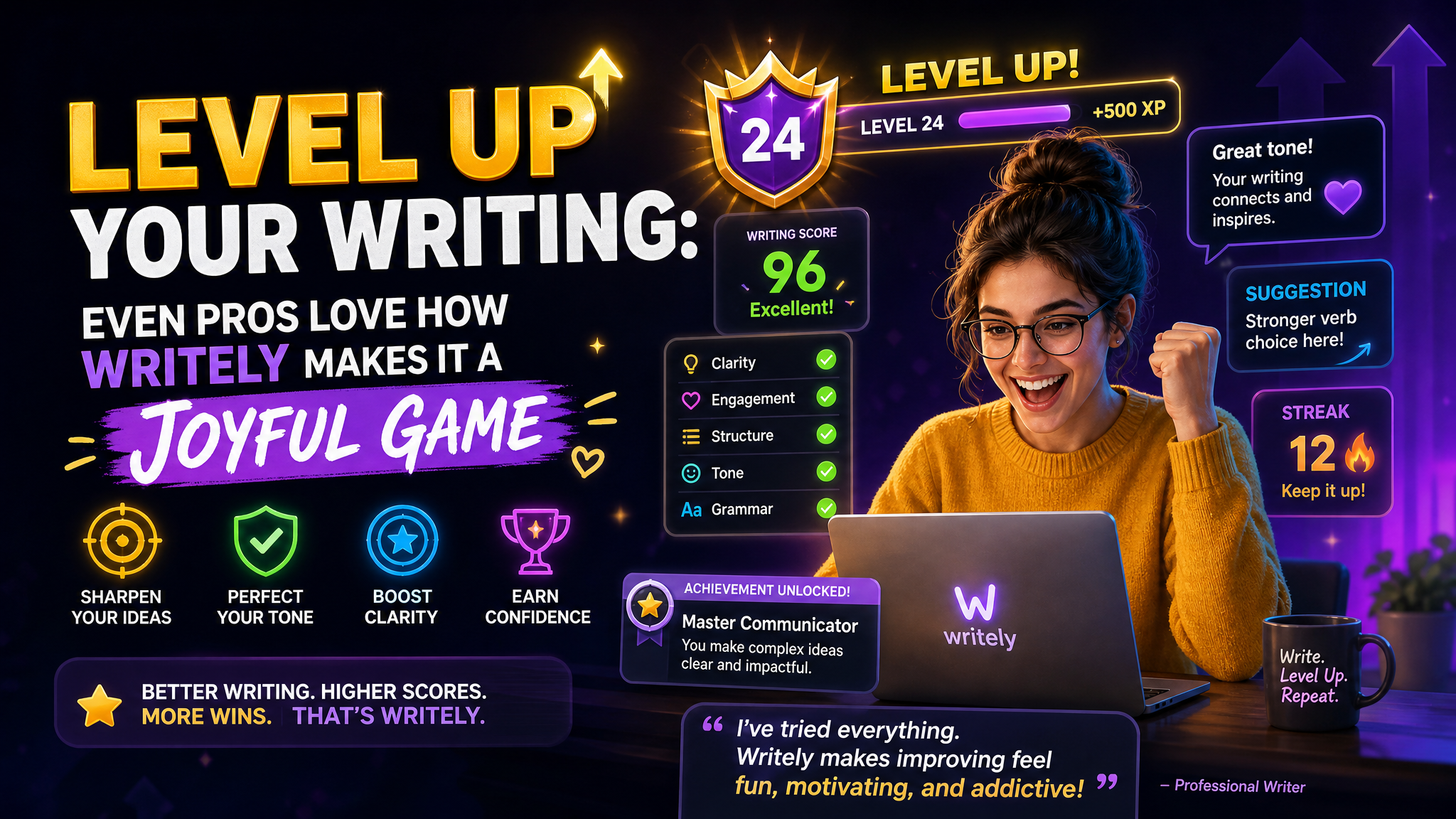
No more staring at a blank screen
The first thing you notice is the way Writely handles "start mode." Instead of throwing you into infinite white space, it gives you a prompt or a loose structure. You type a rough idea, like "review of budget noise-canceling headphones"—and it instantly suggests angles, outlines, or even a first paragraph. That jumpstart removes the dread. You're not writing from scratch; you're editing something you already own.
I tested it on a script for a 3-minute YouTube video. I threw in three bullet points: "price under $50, battery life shockingly good, looks cheap." Writely turned that into a conversational draft with tone tags and pacing suggestions. The result? I edited about 30% and got a script that actually sounded like me, not a robot. The process took maybe 15 minutes instead of an hour.
It rewards progress, not perfection
This is where the "game" metaphor really lands. Writely breaks your writing into small tasks: draft a hook, expand a section, rewrite a clunky sentence. You check them off like quests. Every finished block gives you a small dopamine hit. It's not about writing a masterpiece in one sitting—it's about stacking wins.
I also tried it for SEO blog content. Normally, outlining a 2000-word post takes 45 minutes of digging through competitor stuff. Writely's "organize ideas" feature pulls your scattered notes into a logical flow. It even flags where you're repeating yourself or missing a logical gap. One article on "indoor plant care for beginners" went from a messy list to a solid structure in under 10 minutes. That's not magic—it's just smart UX that respects your time.
The tradeoffs you should know
Okay, the honest part. Writely is great for first drafts, structure, and overcoming the "I don't know where to start" paralysis. But if you need deeply researched, fact-checked content—like medical or financial advice—you can't just hit "generate" and publish. The AI pulls from its training data, which can be outdated or too generic. You still need your own expertise or verification. Also, the tone suggestions sometimes lean conversational. If you need ultra-formal academic or legal writing, you'll spend more time rephrasing.
Another thing: the joy of writing here is real, but it can make you dependent on the scaffolding. When I used it for a few weeks straight, I noticed my own natural flow got a bit lazy—I'd wait for Writely to prompt me instead of trusting my instincts. So use it as a collaborator, not a crutch.
Who should try it (and who might skip)
- Bloggers and content marketers who hate outlining and need speed? Yes, this is your jam.
- Scriptwriters or creators who want to test different angles quickly? Absolutely.
- Students writing long essays? Useful for structure, but double-check citations.
- Professional copywriters who are already fast and confident? You might find it slows you down—unless you're in a creative rut.
The real fit is anyone who dreads the start but loves the finish. Writely bridges that gap by making the middle part feel like play, not pressure. It won't replace your voice. It just removes the friction so you can actually hear it.
Comments
Leave a Comment