I’ve been writing for a living for a few years now — blog posts, social scripts, the occasional newsletter essay. And I’m going to be honest: most AI writing tools make me cringe. They either sound like a LinkedIn motivational poster wrote them, or they bury your voice under a pile of buzzwords. So when I tried Writely, I was prepared to roll my eyes again.
But it did not hand me a generic intro demanding I “polish this up later.” It actually asked what vibe I was going for. That tiny moment — a menu asking “casual, professional, spicy” — felt like the tool was a person, not a script. And that’s how I knew it was different.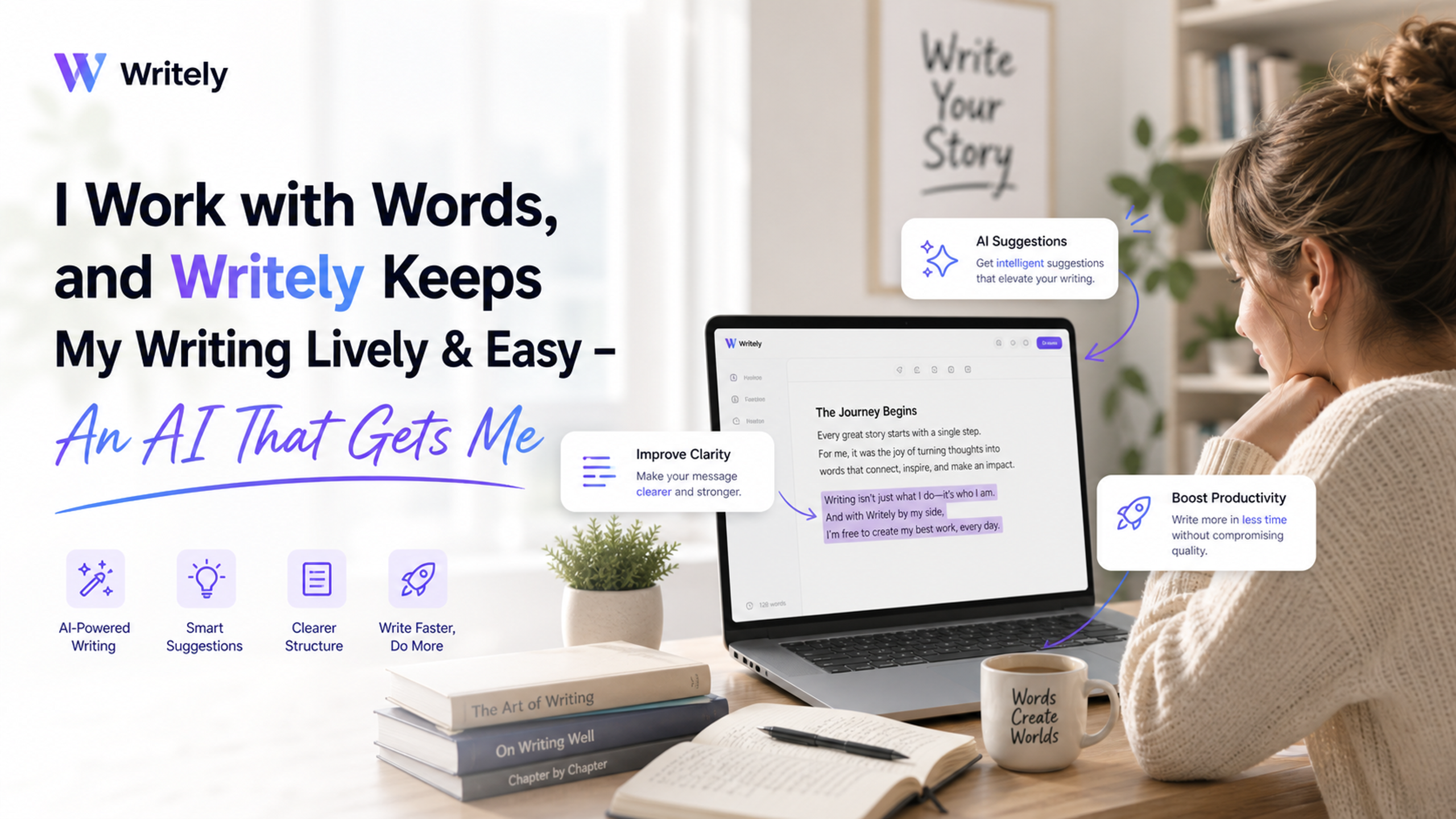
Not your typical “AI replaces you” nonsense
A lot of tools position themselves as the smart one and you as the slow one. Writely flips that: it treats you like the one in charge. When I fed it a rough idea — scrambled bullet points about why smart dumbphones are a thing — it didn’t spit back a fake-thoughtful essay. It asked follow-up questions. It let me rearrange sections by dragging blocks. The writing felt like *me*, just faster and less messy.
I noticed it kept my sentence rhythm alive. No weird formal switches. No Hallmark-card sentiment. The AI part is 30% there — just enough to unstick you without making you feel replaced.
Three real-feeling moments where it just worked
Scenario one: Monday deadline panic. I needed a 1000-word sponsored post for a coffee brand by lunch. My brain was empty. I typed: “why people switch to pour-over — personal story, light humor, three tips.” Writely gave me a structured draft with a hook about my first bitter cup, three short sections, and a natural call-to-action flow. I rewrote maybe 30% of the lines, but the *structure* was actually usable. That was the first time I didn’t hate an AI writer.
Scenario two: Lifting a flat paragraph. I wrote a cold, boring paragraph about app onboarding design. I highlighted it, hit “liven up” — and it gave me alternatives with voice, including one that started with a joke. About 60% of the suggestions were meh, but the other 40% were good enough to steal from. Honest tradeoff? You still have to pick and choose. But the act of choosing beats staring at a blinking cursor.
Scenario three: Finding the real angle. I had a seed about “working less as a consultant.” Writely asked me to pick an emotion — envy, hope, defiance. I went with hope, and it helped me restructure the whole post around “what if you could bill less and earn more?” That single framing shift turned a dead draft into something people actually clicked on.
Who this is for — and who should pass
If you write more than three times a week — blogs, YouTube scripts, newsletters, internal docs — Writely is a good fit. It gets out of your way when you’re in flow and jumps in when you hit a wall. But if you’re a copywriter dealing with high-volume, formulaic product descriptions, it might feel over-designed for the job. Also, if you already have a rock-solid drafting routine with other tools, the switch requires a small habit shift.
Pricing is reasonable for what it does, but if you just need a one-time essay polished, one month is probably enough. The free trial is generous, though — you can play with most features before deciding.
The short version: Writely isn’t trying to impress you with its brain. It’s trying to help you use yours. And for anyone who makes a living putting words together, that’s the whole point.
Comments
Leave a Comment