Every writer I know hits the wall eventually. You stare at a blinking cursor, the words feel stuck somewhere between your brain and your fingertips, and the draft you promised to finish by noon looks like it's not happening. That's the problem Writely claims to solve. Not by writing for you, but by making the act of writing feel less like pulling teeth.
What it actually does differently
Most AI writing tools hand you a block of text and expect you to edit it into shape. Writely takes a different approach. It works more like a thinking partner that happens to type fast. You toss in a rough idea, maybe a few bullet points or a half-baked paragraph, and it helps you expand, structure, and refine without the usual friction.
I tested it on a typical blog post about budget travel tips. I fed it three scattered notes I had jotted down on my phone. Within seconds, it gave me a clean outline, not a finished article, but a skeleton I could actually work with. That alone saved me the twenty minutes I usually spend organizing my thoughts.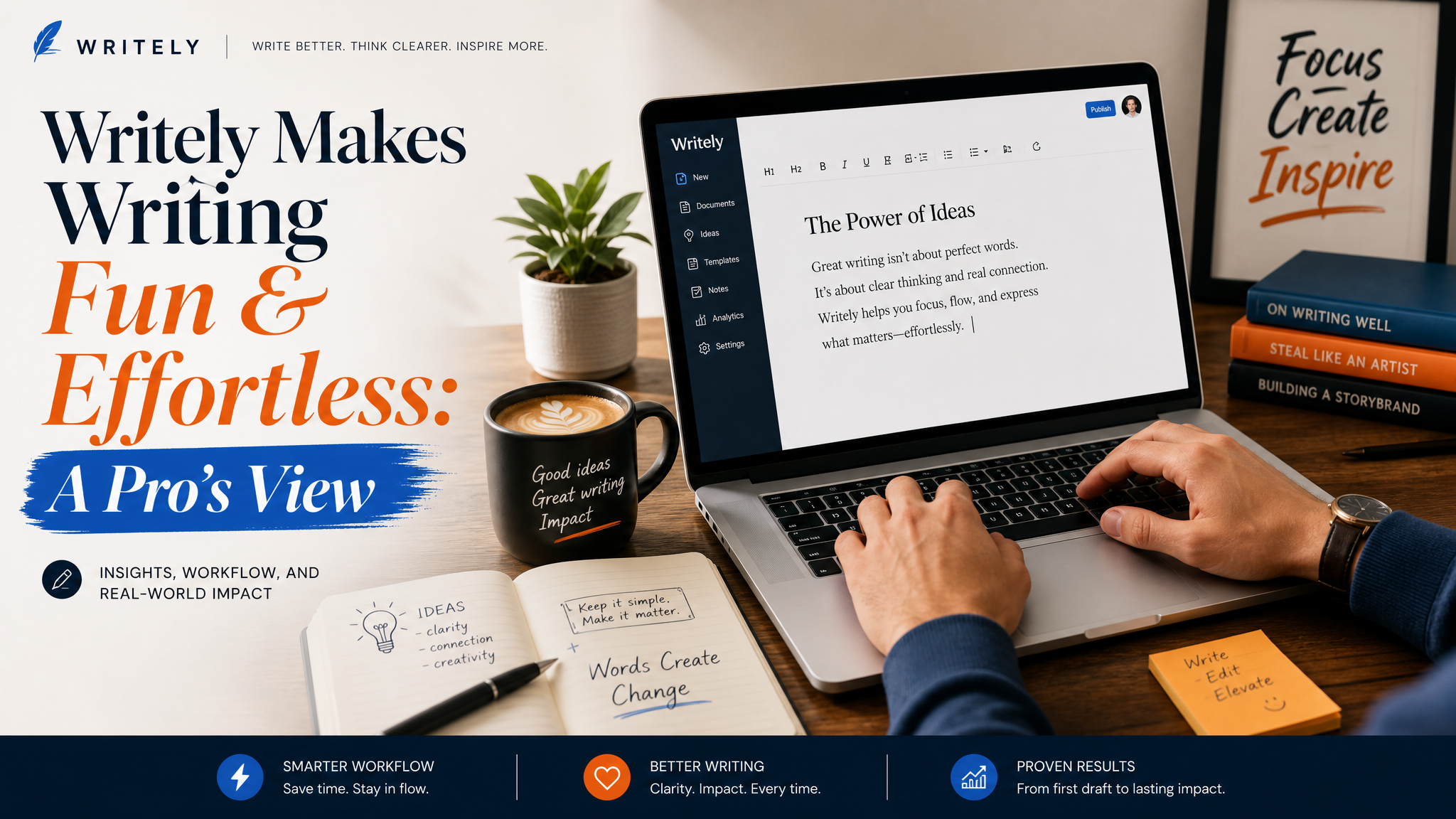
Real scenarios where it clicked
First scenario: a client needed a 1500-word SEO article on electric scooters. I opened Writely, pasted my keyword clusters and a rough angle, and it generated a structured draft with headings, subheadings, and natural transitions. The tone was decent, but I still had to rewrite the intro and punch up the examples. That's the tradeoff. It gets you 60 percent of the way, then you do the finishing.
Second scenario: I was stuck on the opening paragraph for a newsletter. Nothing felt right. I typed "why remote work is harder than people admit" and let Writely suggest three different hooks. One of them was surprisingly sharp. I took that hook, rewrote the rest myself, and the whole thing took maybe ten minutes.
Where it falls short
Writely is not a replacement for thinking. If your raw material is weak, the output will be weak too. I tried feeding it a vague idea about "productivity hacks" and got back a generic list you've seen a hundred times. It needs something to work with. The tool is only as good as the input you give it.
Also, the voice can feel a bit neutral by default. For brand-specific content or highly opinionated pieces, you will need to rewrite large sections. It's good at structure and flow, less good at personality. That's fine if you know your own voice and just need help getting the words down.
Who should actually consider it
If you are a blogger who writes multiple posts a week, or a content creator who constantly fights writer's block, Writely is worth a serious look. It removes the overhead of starting from zero. If you write very technical or niche material, you might find it less useful without heavy editing. It works best for general business content, lifestyle blogs, scripts, and newsletter drafts.
If you are someone who already writes fast and has a strong process, the tool might feel redundant. But if you spend more time staring at a blank screen than actually writing, it changes the game.
The best writing tools don't make you dependent on them. They get you unstuck and then step out of the way. Writely does that reasonably well. It won't win awards for originality, but it will get your drafts done faster, and sometimes that's the whole point.
Comments
Leave a Comment