Most people who want to improve their writing don't have a shortage of advice — they have a shortage of feedback. You can read style guides all day, but until someone (or something) points out that your third paragraph buries the point or that you've used "however" four times in a page, the habits don't change.
That's the gap Writely sits in. It's an AI writing assistant built for blogs, SEO content, and scripts, and it's useful not just for drafting faster but for catching the patterns in your writing you've stopped noticing.
How Writely AI Writing Assistant Actually Builds the Skill
The difference between using AI to replace your writing and using it to improve your writing comes down to how you interact with the output. Writely works best when you treat its suggestions as a mirror rather than a ghostwriter.
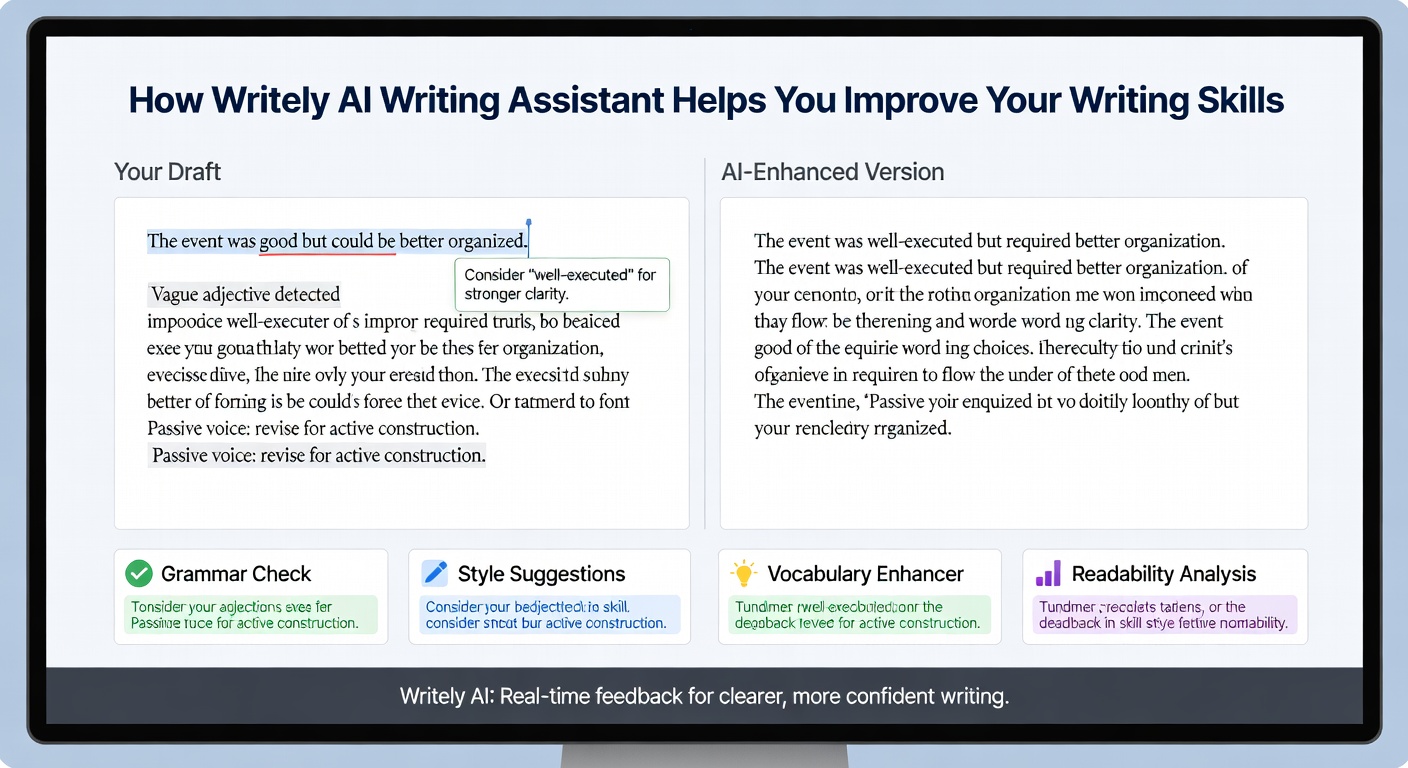
When you draft a blog intro and Writely restructures it for clarity, you can see exactly what changed — and why the revised version lands better. Do that enough times and you start making those moves yourself before the tool has to. The feedback loop is faster than waiting for an editor, and more consistent than self-review.
A few concrete situations where this shows up:
- Rambling drafts: You paste in a rough concept and Writely tightens it. Comparing the before and after trains you to cut earlier in your own process.
- SEO content: Writely helps you work a primary keyword in naturally without stuffing. Over time you internalize the rhythm of writing for search without it feeling forced.
- Scripts and structured content: The tool helps you organize ideas into a logical flow. If you write video scripts or how-to content, seeing how Writely sequences information is genuinely instructive.
- Tone calibration: If your default voice runs too formal or too casual for your audience, working with Writely's suggestions helps you find the register faster.
What It Won't Do
Writely won't teach you grammar rules in a structured way, and it's not a writing course. If you hand it a weak argument, it'll make the sentences cleaner but the logic is still yours to fix. The skill-building happens through active comparison, not passive use.
It also won't replace the judgment calls — what angle to take, what to leave out, what your specific audience actually cares about. Those stay with the writer. What Writely removes is the friction between a rough idea and a readable draft, which frees up more of your attention for the decisions that matter.
Is It the Right Fit for You
If you're already a confident writer who just needs to produce more volume, Writely is straightforwardly useful as a drafting tool. If you're earlier in the process and actively trying to get better, it works — but only if you read the suggestions critically rather than accepting them wholesale.
Writers who get the most out of it tend to use it iteratively: draft something, see what Writely does with it, revise their own version with that in mind. That back-and-forth is where the learning actually happens.
If you want a tool that helps you write better by showing you better writing in context, Writely AI writing assistant is worth trying. Just stay in the driver's seat.
Comments
Leave a Comment