You've got the ideas. You've got the voice. But staring at a blank page still feels like your brain just buffered. The struggle is real: you want to write like a pro—clear, sharp, maybe even a little clever—but you don't want to sound like a LinkedIn influencer or a corporate robot. You want it to feel like you, just… better. That's exactly the gap Writely is trying to fill.
Writely is not your grandma's AI writer. It's built for blogs, SEO content, and scripts, but the real magic is how it handles tone. I've tested it on a few personal projects—think "why your 9-to-5 is overrated" type posts and a short YouTube script about building habits—and it actually gets the Gen Z casual vibe without overdoing the "bestie" thing. It doesn't force emojis or slang where they don't belong. It just takes your rough idea and makes it readable, fast.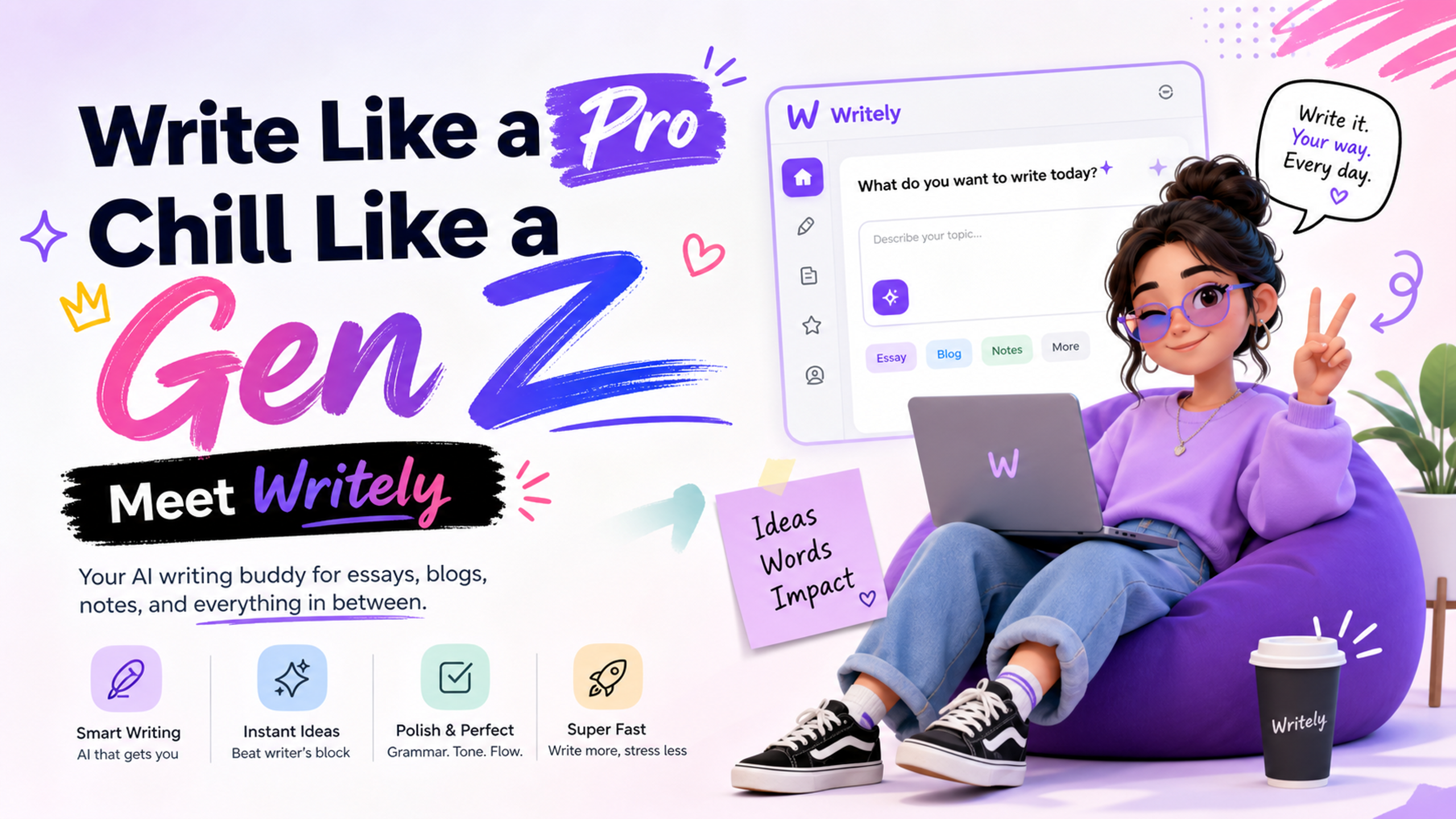
When does it actually shine?
Let's say you need a blog post draft about productivity tools. You dump a couple of bullet points: "Notion vs. Trello," "why I switched," "Battery life matters." Writely spits out something structured but loose, with short paragraphs and a slightly conversational edge. For me, that cut my drafting time in half. The SEO suggestions are subtle—keywords woven in without making the text feel keyword-stuffed.
Another scenario: a script for a TikTok or Reel. You have a messy idea about "why you should stop multitasking." Writely rewrites it into a tight, hook-first script that actually sounds like something you'd say out loud. That's rare. Most AI tools either sound like a lecture or a cereal commercial.
Where it gets a little tricky
Writely isn't perfect. Sometimes it over-polishes—takes your raw, borderline-rant paragraph and makes it too smooth, losing a bit of edge. You'll need to push back on the edit button occasionally. Also, if you're writing super niche topics (like quantum computing for poets), the AI might go a bit generic. You'll need to feed it better instructions or manually tweak.
Another tradeoff: it's not a replacement for your voice. If you rely on it too much, your writing might start sounding samey across pieces. I noticed that after a few uses, the sentence patterns felt familiar. Rotating between Writely and your own raw drafts keeps things fresh.
Is this for you?
If you're a solo creator, a blogger, or someone who writes content as part of your gig but hates the drafting process—this could save your sanity. You still have to have opinions and actual knowledge. Writely just helps you get from "uhh, I have a point" to "okay, this reads well" without the hours of rewording. And it keeps that chill Gen Z tone intact, which is honestly harder to find in AI tools than you'd think.
If your writing style is already minimalist and your content is short-form (Twitter threads, emails), you might not need the structure it offers. But for anything longer than a tweet, it's a solid co-pilot.
Bottom line
Writely isn't a magic wand—you still have to show up with ideas. But it does the heavy lifting of making those ideas sound polished yet personal. It walks the line between pro and chill better than most tools I've tried. Give it a spin on your next draft. If you hate the output, you can always go back to the blank page. But you probably won't.
Comments
Leave a Comment