Most people don't struggle with having nothing to say about their life — they struggle with where to start. You open a blank document, type a few words, delete them, and close the tab. Writely is built around the idea that a few rough keywords are enough to get something real on the page.
How the Keyword-to-Story Flow Actually Works
You drop in simple inputs — a name, a year, a feeling, a place — and Writely generates a structured draft around them. It's not a chatbot you have to prompt-engineer. The interface is closer to filling out a short form than writing a prompt, which removes a lot of the friction people feel when staring at an AI text box.
The output leans toward readable prose rather than bullet summaries. For life story content specifically, that matters. A timeline of facts isn't a story. Writely attempts to connect the inputs into something with a narrative shape, which is more useful than a raw list even if you plan to rewrite heavily afterward.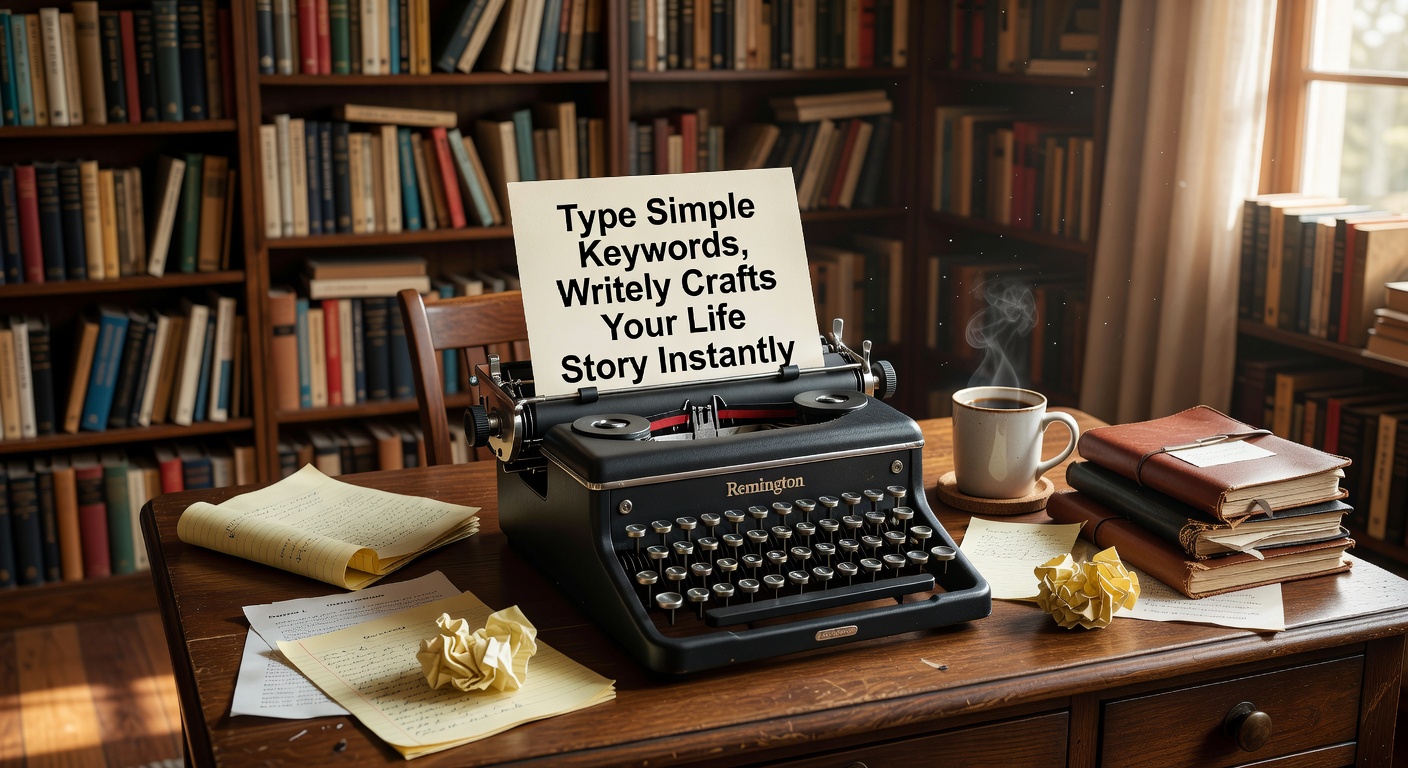
Where It Holds Up and Where It Doesn't
For blog posts and SEO content, the keyword-driven approach works well. You get a working draft fast, the structure is usually sound, and the tone is adjustable. For personal life writing — memoirs, family histories, tribute pieces — the results are more uneven. The tool can produce something emotionally coherent from sparse inputs, but it can also flatten nuance if the keywords you provide are too generic.
Feeding it specific details makes a real difference. "1987, moved to Chengdu, first factory job, met my wife" produces something more usable than "childhood, work, family." The more concrete your inputs, the less editing you'll need on the back end.
Realistic Use Cases
- Someone writing a parent's biography for a memorial booklet who has notes but no writing experience
- A freelance content writer who needs a first draft of a personal brand story for a client
- A blogger who wants to turn a rough outline into a readable post without spending an hour on structure
- A small business owner writing an "our story" page and keeps putting it off
In all four cases, the value is the same: you skip the blank-page paralysis and start with something to react to instead of something to invent from scratch.
Is Writely the Right Fit for You
If you're a strong writer who just needs organizational help, Writely's drafts might feel too finished — you may find yourself fighting the generated voice rather than building on it. In that case, a simpler outlining tool might serve you better.
If writing is genuinely hard for you, or if you're producing content at volume and need a reliable starting point, the keyword-to-draft flow is practical and low-friction. The tool doesn't require you to be good at prompting, which is a real advantage over general-purpose AI assistants.
The short version: Writely works best when you have the raw material — the facts, the memories, the key points — but not the time or skill to shape them into prose. That's a specific problem, and it solves it reasonably well.
Comments
Leave a Comment