You sit down to write. The cursor blinks. Fifteen minutes later, you've typed three words and deleted two of them. The blank page wins again.
This is the problem Writely tries to solve. Not by writing for you — there are plenty of tools that do that, and the results usually feel hollow — but by helping you get from "I have an idea" to "I have a draft" without the usual resistance.
What Writely Actually Does Differently
Most AI writing tools present themselves as magic wizards. Type a prompt, get a blog post. Writely takes a slightly more grounded approach. It's built around the idea that your rough concepts are valuable — they just need structure.
The interface is straightforward. You paste in notes, bullet points, or half-baked thoughts. Then you use the editor to expand, rephrase, or reorganize. It feels less like outsourcing your writing and more like having a capable assistant who actually listens to your direction.
For blog posts, it handles the common friction points: introductions that stall you out, transitions between sections, and conclusions that tie everything together without sounding like they were generated by a machine.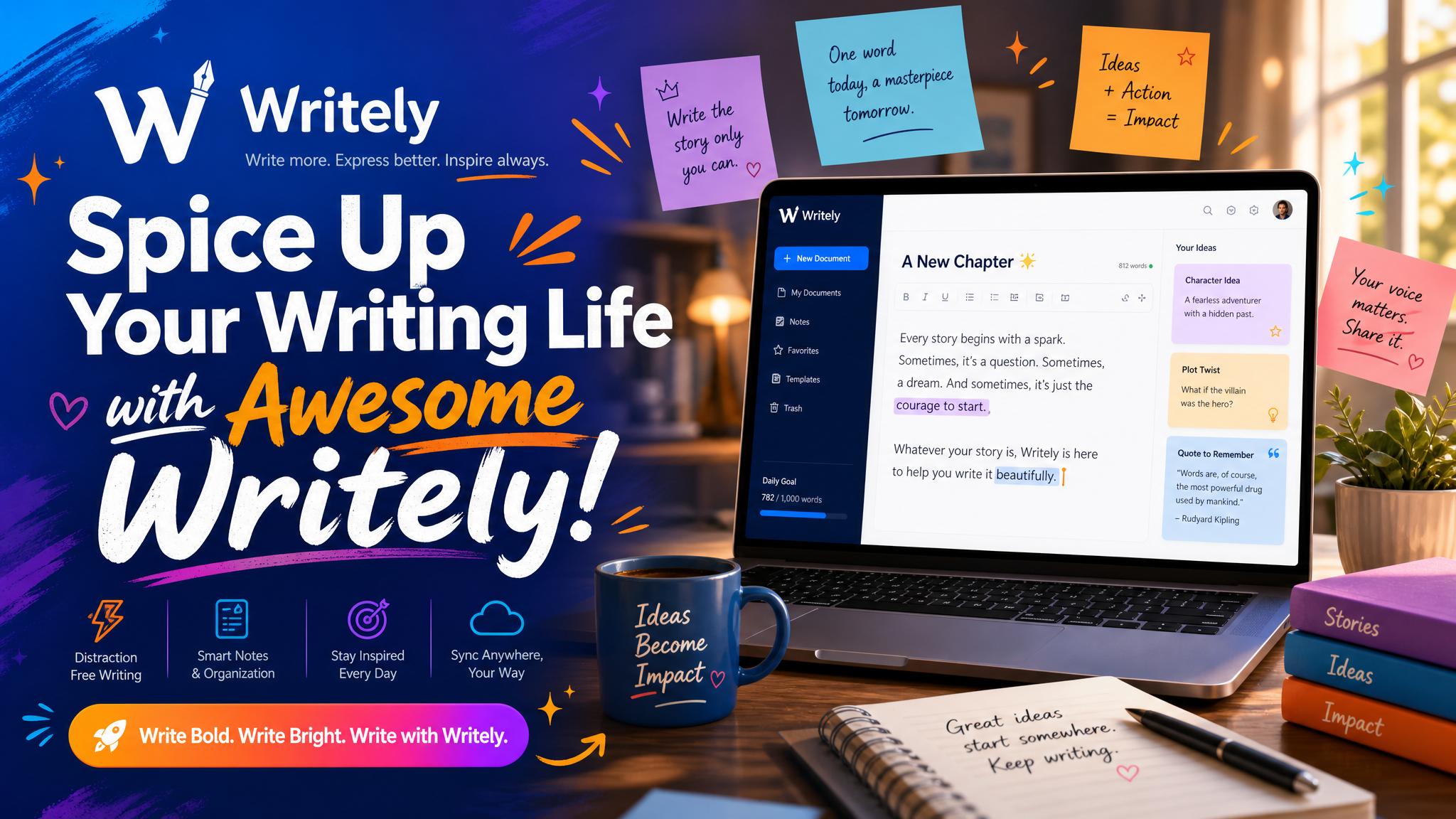
Three Scenarios Where It Shines
The SEO draft that keeps getting pushed to tomorrow. You have keywords, you have an outline, but the blank page remains blank. Writely takes your headings and bullet points and turns them into something you can edit rather than something you have to invent from scratch. The time sink shifts from "starting" to "refining," which is actually the more productive part anyway.
The script that needs to sound like you. Scriptwriting is brutal because every word matters, and the rhythm has to be right. Writely's tone controls let you dial in formality and style without losing the original intent of your lines. It won't replace your ear for dialogue, but it will save you from rewriting the same opening three times.
The content calendar that's three weeks behind. When volume matters, Writely helps you batch drafts quickly. The real win isn't speed alone — it's that you can generate multiple versions of the same concept and pick the one that actually works, rather than settling for whatever you managed to grind out at 11 PM.
The Tradeoffs Nobody Talks About
Writely is not a set-it-and-forget-it tool. If you want something that produces finished, publish-ready content with zero effort, you'll be disappointed. The output needs editing. The voice needs adjusting. The facts need checking — because like every AI tool, it can confidently generate plausible nonsense.
Where it falls short: very technical writing. If you're documenting a complex API or writing deep product specs, the AI tends to flatten nuance. You'll spend more time correcting it than you would just writing yourself. Similarly, highly personal or opinionated pieces require significant rework — the tool's default voice is clean but neutral, which isn't always what you want.
There's also the question of originality. Writely helps you write faster, but it won't generate breakthrough ideas. You still need to bring the perspective. The tool handles the mechanics; you handle the thinking.
Who Should Actually Use It
If your writing bottleneck is execution — you have ideas but struggle to get them into draft form — Writely is worth trying. It's especially useful if you write regularly and want to reduce the friction between starting and finishing.
If your problem is that your writing lacks voice or depth, an AI assistant isn't the fix. That's a reading and thinking problem, not a tool problem. No editor can substitute for having something worth saying.
Writely sits in the middle of the market: more purposeful than a basic text expander, less heavy-handed than a fully automated content generator. For the right workflow, it removes the part of writing that most people hate — the painful start — and leaves the part they actually enjoy: making something good.
Comments
Leave a Comment