You know that feeling when you pour your heart into a piece of writing—and it comes out sounding like a corporate manual from 1998? Yeah, same. Whether it’s a blog post, an email, or a script you actually want people to finish reading, the default mode for most AI tools is safe and boring. But safe doesn’t hold attention, and boring doesn’t get shared. So how do you write like a real person—with humor, with edge, with a voice that doesn’t make your audience yawn before the second sentence?
That’s exactly where Writely Studio comes in. Not as a robot that polishes your words into lifeless perfection, but as a tool that helps you keep your personality intact—and even crank it up a notch. We’re talking about writing that actually sounds like it came from a human being who has opinions, who’s maybe a little sarcastic, who knows when to drop an unexpected analogy and when to just get to the point.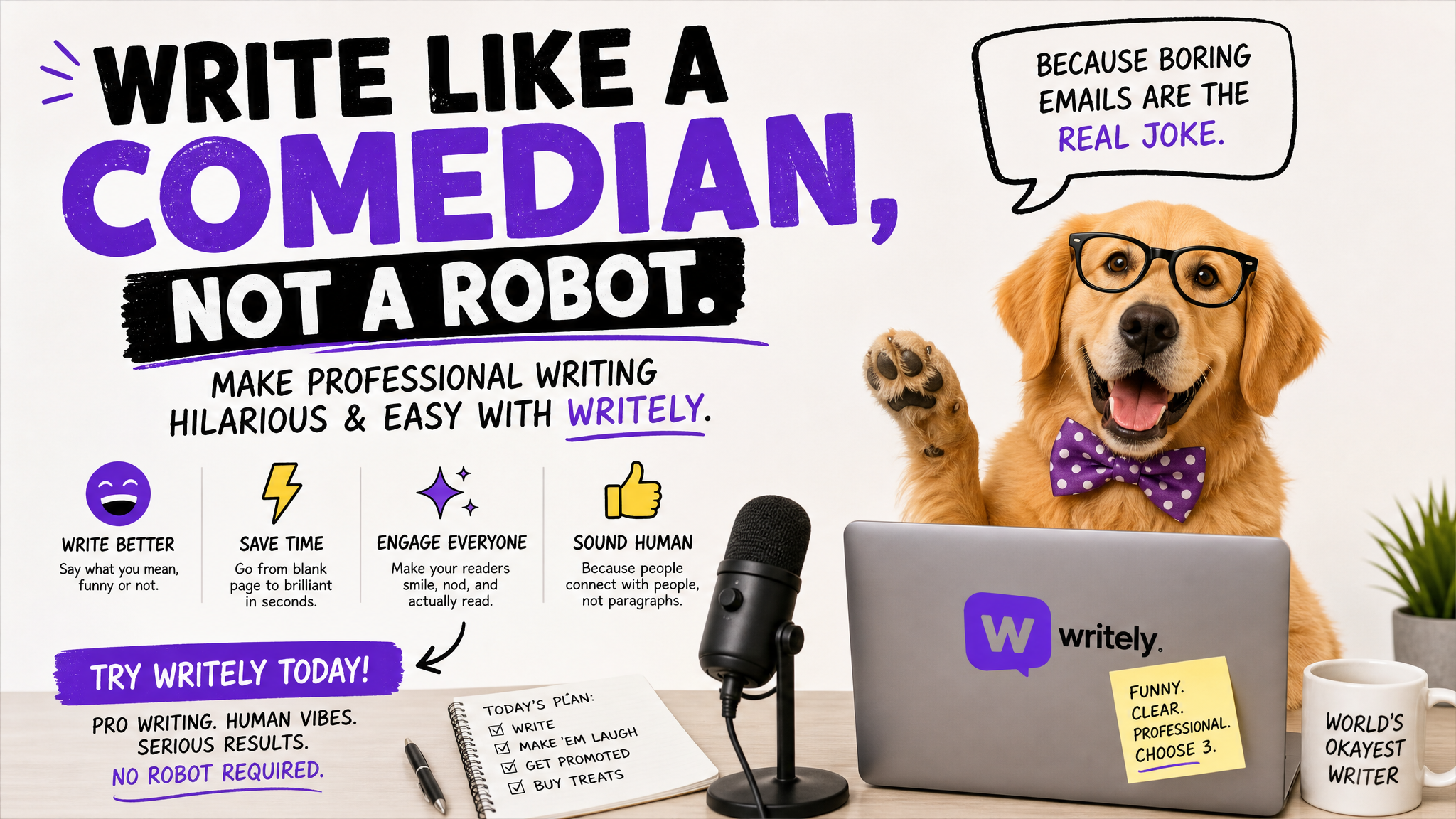
The robot problem is real
I tested a few popular AI writing assistants before settling into Writely. Most of them give you something that looks correct on the surface—grammar clean, structure logical, but completely drained of any character. It’s like ordering a burger from a fancy restaurant and getting a patty with no seasoning. The technical name for it is “GPT-neutral voice” and it’s basically kryptonite for anyone trying to build a personal brand or stand out in a crowded niche.
With Writely, the drafts I generated actually had a rhythm. Short sentences where I wanted punch, longer ones to build a joke’s delivery. And the best part? The “comedian” mode isn’t about forcing a laugh every line—it’s about mixing natural humor into professional content without breaking the trust of your reader. Think of it as adding a wink instead of a clown suit.
Real scenarios where it clicks
Let’s say you’re writing a LinkedIn post about a failed project. Most AI assistants will give you a polished version that sounds like you’re giving a TED Talk in a therapy session. Writely, on the other hand, can help you keep the vulnerability real and add a self-deprecating line that makes people actually pause and hit “like.” I tried rewriting an old client email that was technically correct but dry. With Writely, I ended up with an opening like: “We could tell you our latest feature is ‘optimized for efficiency’—or we could just say it saves you about three coffee breaks worth of hassle.” That’s not over-the-top; it’s just human.
Another use case: SEO content for a startup blog. You want to rank, but you also don’t want to sound like every other generic “5 Ways to Improve Your SaaS Workflow” article. Writely helps inject opinion, subtle humor, and voice while still hitting the keyword stuff. It’s the difference between “Our tool helps streamline your workflow” and “If your workflow involves twelve tabs and a prayer, you might like this.”
What to watch out for (the tradeoffs)
Now, careful—Writely isn’t perfect for every situation. If you’re writing a formal legal document or a crisis communication, you probably don’t want to add a punchline. And even in creative writing, sometimes the comedian tone can feel forced if you’re not naturally a jokey writer. I noticed that the tool works best when you already have a sense of your own voice; it amplifies rather than invents. So if you’re completely lost on your tone, you might need to experiment a bit to find the right prompt or style setting.
Compared to tools like ChatGPT or Jasper, Writely stands out for the specific focus on voice and personality. ChatGPT can generate humor too, but you have to steer it hard and it often forgets your context. Writely feels more intentional about keeping a consistent, non-robotic tone from start to finish. However, if raw speed and brute-force content generation is your only need, a broader AI tool might be more resourceful. But for anyone who cares about how the writing feels, Writely wins.
Bottom line: if your writing currently reads like a manual you’d skip, try the comedian approach. Start with a single blog post or an email that you normally dread writing. Use Writely to find a sentence that makes you smirk—then build from there. You don’t have to be hilarious. You just have to stop being a robot.
Comments
Leave a Comment