Staring at a blank document with nothing but a handful of keywords like "slow living" or "morning walk" is exhausting. You know the vibe you want, but bridging the gap from a few SEO terms to a readable, engaging lifestyle piece takes serious effort. That is exactly the friction Writely Studio aims to eliminate. Instead of wrestling with complex prompts or copying text back and forth, you can turn keywords into nice life articles with Writely without losing your mind over sentence structure and flow.
Let’s say you are running a wellness blog and your content calendar demands a post on "journaling," "anxiety relief," and "evening routine." Usually, you would spend twenty minutes just outlining the narrative arc. Inside Writely, dropping those terms in generates a structured draft that actually reads like a lifestyle post, not a robotic Wikipedia summary. It suggests natural transitions and practical angles—like connecting the physical act of journaling to actual sleep quality—saving you from that dreaded blank-page paralysis.
Another common headache is having rough concepts but no order. Maybe you dictated a messy voice memo about "decluttering your kitchen counters" and need it shaped up. Writely’s idea organization feature takes that rambling input and strips it into a logical sequence. You still have to tweak the phrasing to sound like you, but the heavy lifting of structuring the intro, body paragraphs, and actionable takeaways is already done. It turns a brain-dump into a coherent draft in seconds.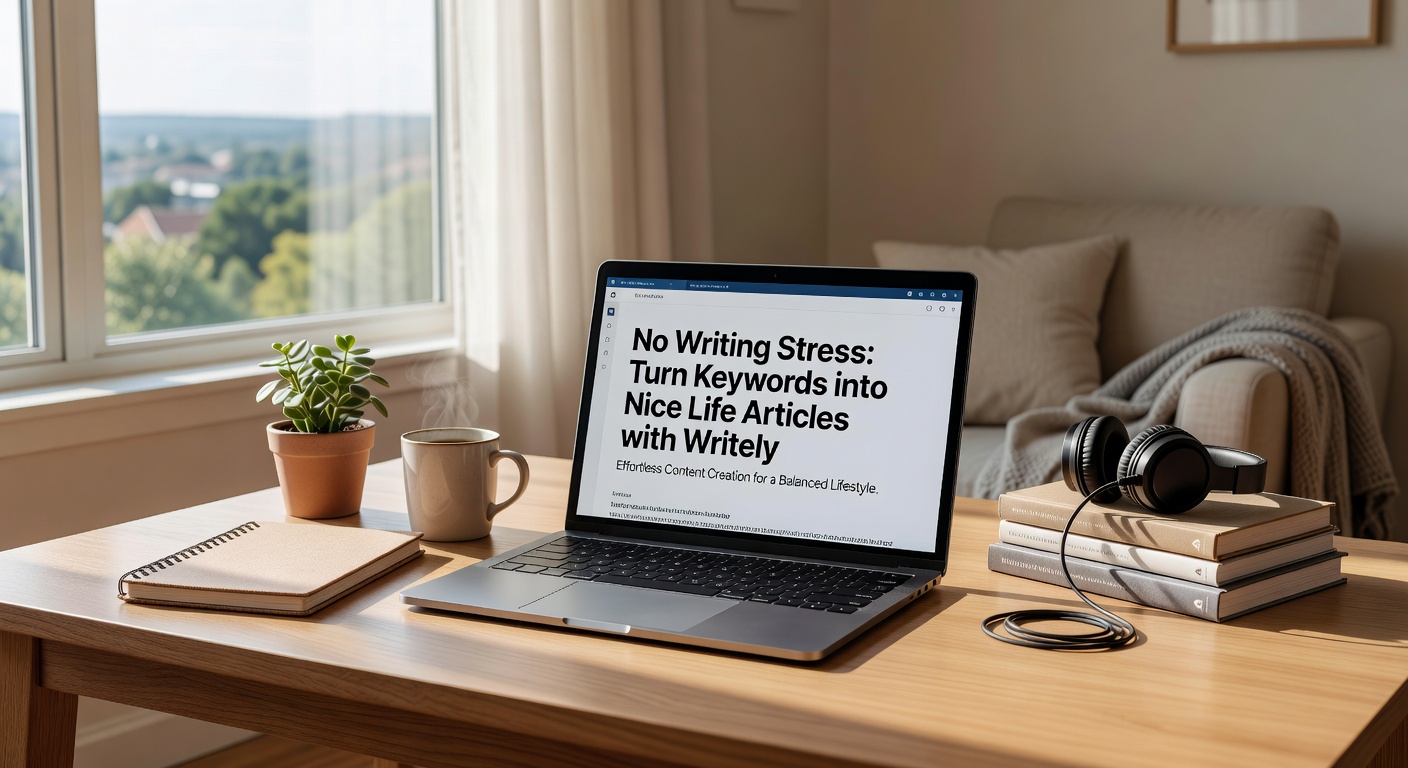
How to Turn Keywords into Nice Life Articles with Writely
The core promise here is speed without stripping the "life" out of lifestyle content. Standard SEO tools often pump out stiff, keyword-stuffed paragraphs that feel dead on arrival. Writely tries to smooth that out. When you feed it a primary keyword, it builds the surrounding context. If your keyword is "minimalist wardrobe," it doesn't just awkwardly repeat the phrase; it builds out sections on capsule basics, seasonal rotation, and the mindset shift behind buying less. You get a draft that feels much closer to a finished blog post than a raw AI output.
Because the tool is built specifically for bloggers and script writers, the formatting it outputs is already web-friendly. You get headers that make sense, short paragraphs suited for mobile reading, and logical breaks for images or links. It skips the academic essay format that generic AI models default to, which saves you a ton of reformatting time.
Tradeoffs and Realistic Limitations
Let's be real about what Writely cannot do. Lifestyle articles survive on personal voice and lived experiences. The AI can generate a perfectly competent draft about the "mental benefits of walking," but it cannot invent the story about your specific walk through the park last Tuesday where you ran into an old friend. You have to inject that yourself. If you just hit publish without editing, the post will still sound generic. The tool is a drafting accelerator, not a replacement for your actual perspective.
There is also the risk of over-reliance. If you use it for every single post, your blog might start suffering from sameness. The generated structures are helpful, but they are recognizable once you see the pattern. You will need to intentionally break the mold occasionally—maybe start a post with an anecdote instead of the standard hook the AI provides—to keep your readers engaged long-term.
Figuring Out If It Fits Your Workflow
Writely makes the most sense if you are a content creator or blog manager staring down a heavy publishing calendar. If you need to move from a scattered concept to a solid draft in under ten minutes, this bridges that gap efficiently. It is also highly useful if you consistently struggle with structuring long-form posts and need a nudge to get the words flowing.
On the flip side, if you are writing highly personal essays or literary memoir, the AI’s structural suggestions will probably feel restrictive. You would likely spend more time undoing its formatting than using it. And if you already have a tightly polished prompt engineering workflow in ChatGPT or Claude, Writely might feel slightly redundant, though it does keep everything in one editor without the constant copy-pasting between tabs.
Writing lifestyle content shouldn’t mean burning out over a few SEO terms every week. If you need a reliable way to turn keywords into nice life articles with Writely, it handles the awkward middle stage between idea and draft better than most. You bring the personal anecdotes and the final polish; let the assistant handle the structural heavy lifting.
Comments
Leave a Comment