We all have that Notes app graveyard. Half-formed ideas, voice memo transcripts, random URLs, and a few bullet points that made perfect sense three days ago but now look like gibberish. Turning that chaos into a publishable draft usually means staring at a blinking cursor, trying to reconstruct what you actually meant. Writely Studio steps in right at that gap. The core pitch is simple: take your messy notes and get to a finished draft fast. But most AI writing tools just slap a generic gloss over your input. Does Writely actually handle the mess, or does it just polish the surface?
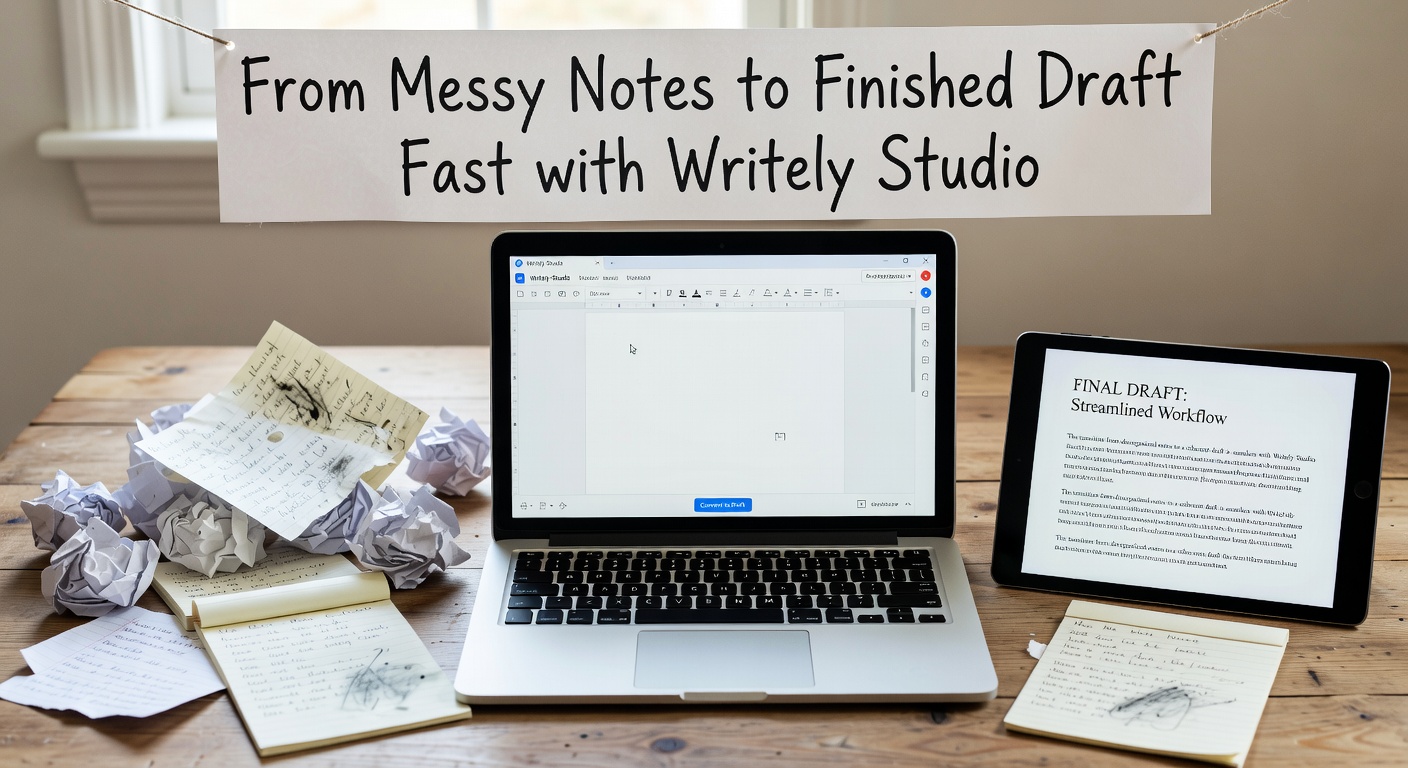
The Messy Notes to Finished Draft Pipeline
Dumping raw input into an AI often yields robotic, slightly off output. Writely Studio tries to avoid this by focusing on organization before generation. You paste in your scattered thoughts—say, a rough SEO outline with fragmented keyword ideas and a paragraph of venting about a product's UX. Instead of instantly spitting out a thousand-word article, it structures the input first. It pulls out themes, suggests headings, and asks you to confirm the direction.
This alignment step matters. If an AI just guesses your intent from garbage input, you get garbage output. Writely forces a brief pause to map the logic, which actually saves time on edits later. You still have to approve the structure, but you aren't manually dragging bullet points into an outline before the tool even starts working.
Concrete Use Cases
The tool shines brightest when your input is somewhere between a vague idea and a half-written piece.
SEO Blog Drafts
You have a target keyword, three subtopics, and a quote from a subject matter expert. Writely takes that sparse outline and builds out the H2s, filling in the logical gaps without inventing fake statistics. You still need to verify the tone and add specific details, but the skeleton is solid enough to start chiseling immediately.
Script Outlines
You jot down a scene premise and two lines of dialogue on your phone. The tool expands the pacing and action beats. It won't write an Emmy-winning script from a napkin sketch, but it gets you past the blank page syndrome by offering a workable scene structure.
Meeting Transcripts
Pasting a raw Zoom transcript into the editor. Writely strips the filler words and extracts the actionable items, turning a 45-minute ramble into a concise internal memo. It handles the tedium of summarization without losing the actual decisions made.
Fit, Tradeoffs, and Alternatives
Writely Studio is built for structural expansion, not line-by-line prose polishing. If your notes are already 80% written and you just need grammar fixes or tighter phrasing, this is overkill. Grammarly or Hemingway will do that job faster and cheaper. Writely is for when you don't have a draft yet; you have a pile of ingredients.
The main tradeoff is voice. Its generation can sometimes flatten your unique tone. If your messy notes rely on a very specific sarcastic edge or niche jargon, the AI might smooth out those edges into standard, readable blog-speak. You have to push back during the editing phase to keep the flavor intact. Also, if your notes are too sparse—just two words like "crypto regulation"—the tool leans heavily on general knowledge, risking hallucinations or bland filler. It works best when you feed it medium-mess: enough context to steer the AI, but not so much that you've already written the thing yourself.
For alternatives, if you want a tool that just generates content from a one-line prompt, Jasper or Copy.ai do that faster, but with less control over the final structure. If you want long-form fiction world-building, Sudowrite is more specialized. Writely sits in the middle—it wants your messy context, but it also wants you to steer the output.
Final Verdict
The real bottleneck for most writers isn't the final polish; it's the transition from scattered ideas to a coherent first draft. Writely Studio actually speeds up that specific phase. Taking your messy notes to a finished draft fast requires a tool that respects your raw input while structuring it logically, and Writely does this well. Provided you give it enough breadcrumbs to follow and are willing to tweak the output to keep your voice intact, it's a practical shortcut for the ideation-to-draft gap. It won't eliminate editing, but it finally makes that first draft less of a chore.
Comments
Leave a Comment